manifest
The Canary Islands are a fragile and isolated territory, with an enormous ecological and cultural wealth. To begin with, the fact that we are islands makes us special in itself: despite the fact that only 5% of the earth’s surface is made up of islands, they are home to 25% of the planet’s biological diversity. To continue, the Canary archipelago is considered a biodiversity hotspot. Only around thirty places in the world are considered a biodiversity hotspot. Moreover, due to its volcanic origin, its orography, the trade winds and its small surface, the Canary Islands is the region with the greatest climatic and landscape diversity in Europe. Finally, approximately 40% of the Canary Islands’ territory is protected and, in these areas, it is home to the highest number of exclusive species of flora and fauna in the whole of Spain.
On the other hand, these islands also treasure an immense cultural heritage: the legacies of a pre-Hispanic African world of Berber culture have merged over the centuries with the influences of European and American peoples, resulting in a unique social amalgam with an identity marked by diversity. This wide range of cultures is exhibited through traditions, festivals, music, sports, plastic arts, literature, architecture, gastronomy, language and a particular popular idiosyncrasy.
Foto: Jonathan García
All this overflowing and undeniable natural and cultural wealth is internationally recognised, both on a scientific level and by many of the foreign visitors who choose to spend their holidays on these islands. But it seems that all this heritage is not respected or valued as it deserves.
Our archipelago is experiencing a critical ecological, economic and social situation. This situation is directly caused by an economic model that commodifies the territory and the life it harbours. The economic model we are talking about is mass tourism, which involves a huge machinery designed to support massification and the supply of basic resources in a territory as fragile and heavily dependent on the outside world as these islands are. It is well documented through numerous studies and research that so-called Overtourism (mass tourism) leads to environmental degradation, an increase in the cost of living and the socio-cultural impoverishment of the places that suffer from it. Examples can be found all over the world: from the Thai islands of Kho Phi Phi to Machu Picchu, from Easter Island to Abu Simbel, from Hawaii to Santorini. They are all paradises that are “dying of success” and whose degradation, in many cases, is already irreversible.
For years we have been observing a series of actions on the part of the Canarian institutions (Town Councils, Island Councils, Autonomous Government) that are in no way aligned with the conservation of the ecological and cultural values of these islands, but rather are directly attacking their heritage. The economic model that has been implemented and that still intends to perpetuate in the Canary Islands exerts a savage pressure on nature and its resources, consuming soil, water, energy, generating waste, requalifying land, destroying protected species, devastating the landscape and causing unprecedented environmental degradation. Everything that makes us unique is being destroyed and, more worryingly, the fragile material basis for supporting life on these islands is being undermined.
All the tension that this model generates in the territory and ecosystems also affects the social sphere: for years the Canary Islands have been at the top of the rankings of autonomous communities with the highest risk of social exclusion, poverty, rising housing costs, youth unemployment, school dropouts, brain drain and job insecurity. We have one of the worst public health systems in the country and the data on our level of dependence on foreign imports of food, energy and products of all kinds are alarming.
The authorities and part of the business sector are convinced that the solution is to continue overcrowding the territory with hotels and large infrastructures, with the argument that this economic model will bring us work and well-being. This has become part of the collective discourse and we have been repeating it for decades like a mantra, but in the light of the data, it seems clear that this is a mistake. It is clear that tourism brings work, although life becomes more expensive as the number of visitors increases and the average wage is insufficient to pay rent and live in dignity. It is also clear that tourism brings wealth, but the data leave no room for doubt: this wealth is very badly distributed, since in the Canary Islands we have the highest levels of inequality in the whole country.
We are facing an emergency situation; we are running out of time. We need and demand a clear and forceful reaction from the political and business classes. We need to make a firm commitment to a structural change towards an economic and social model that puts life at the centre. A model that respects life as the supreme and sacred good that it is. A model that is economically self-contained, that redistributes the wealth generated. In short, a system that provides support for a life worth living on this earth, both for present and future generations.
We know that a change of model is no easy task. That all this implies that those who today have many privileges may have to accept having fewer. That we may have to detach ourselves from the models of growth and consumption that have been imposed for as long as we can remember, and begin to move towards approaches such as material degrowth. All of this is an immense challenge and we face years, even decades, of work to change mentalities and ways of functioning. The dominant discourses have been responsible for sowing mistrust towards any alternative, generating in the population a kind of Stockholm syndrome that makes us live clinging to that which harms us.
We are aware that there are no magic solutions or perfect alternatives, but in our opinion, it is clear that change is necessary and that, if we do not undertake it voluntarily, it will be imposed on us, as the global circumstances we are already experiencing (climate change, economic crises, pandemics, war, migration, energy crises…), together with our special situation of fragility and vulnerability as island territories, are pushing us inexorably towards it.
At the Canarina Foundation we believe that there are other viable models and that, in fact, they are already being developed inside and outside the Canary Islands. This whole ecosystem of alternatives is the seed of a new reality, that is, of this other way of relating socially and with the territory we inhabit, and which we are responsible for preserving.
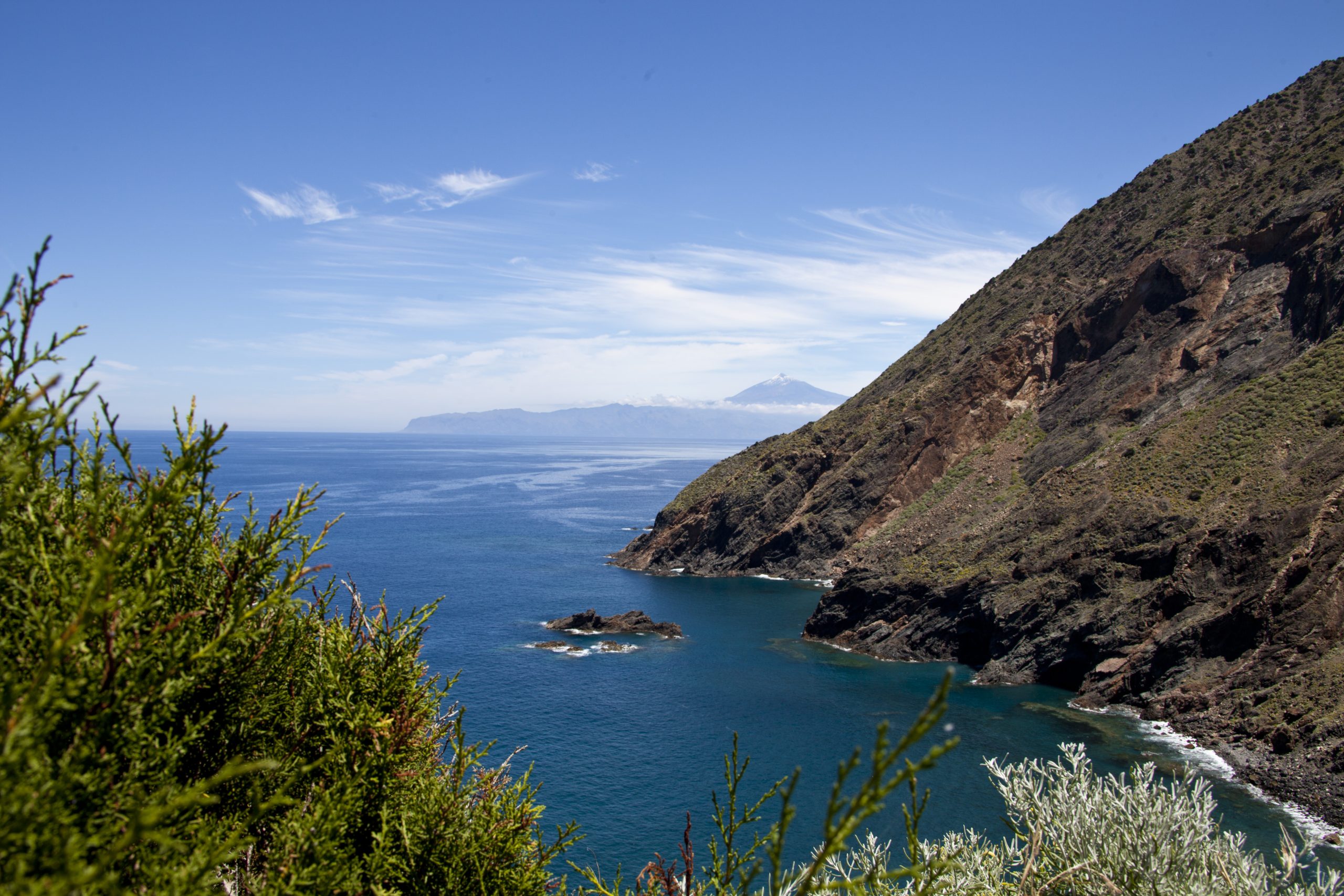
Foto: Jonathan García